§5 annex: More about sufficiency. This page elaborates on §5 of the home page.
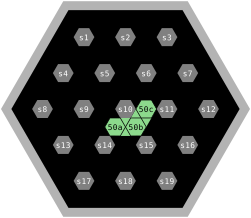
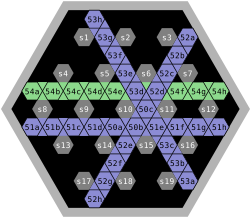
§5X. The board-filling procedure starts with placing on the board any tile not all of whose hexagons lie in a straight line. Suitable are all the factory tiles, and tile 50 invented here as a minimal example:
| figure 5a — tile 50 |
|
Now tiles are added:
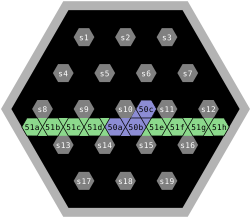
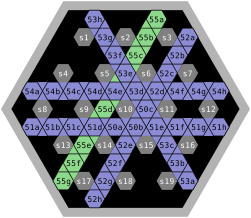
| figure 5b1 install tile 51 via 50a-50b |
figure 5b2 install tile 52 via 50b-50c |
figure 5b3 install tile 53 via 50c-51e |
 |
 |
 |
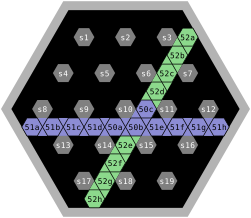
| figure 5b4 install tile 54 via 52d-53d |
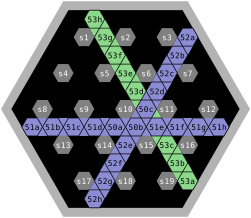
figure 5b5 install tile 55 via 53e-54e |
figure 5b6 install tile 56 via 54d-55d |
 |
 |
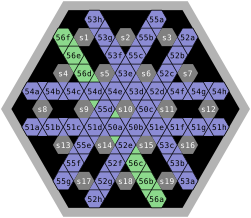 |
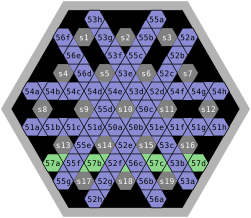
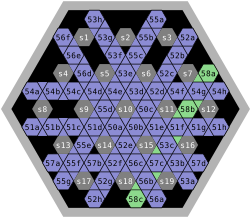
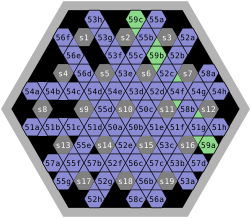
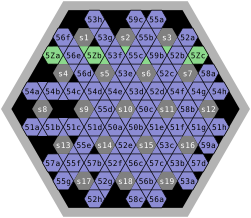
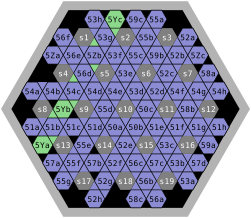
At this point, the method should be clear. Here is the second time around the board:
| figure 5c1 — add tile 57 | figure 5c2 — add tile 58 | figure 5c3 — add tile 59 |
 |
 |
 |
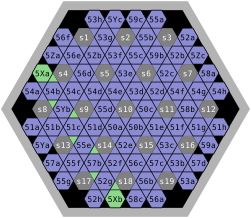
| figure 5c4 — add tile 5Z | figure 5c5 — add tile 5Y | figure 5c6 — add tile 5X |
 |
 |
 |
Third time around the board:
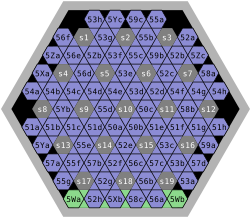
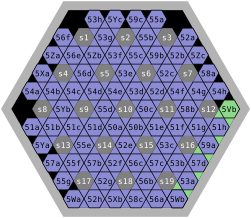
| figure 5d1 — add tile 5W | figure 5d2 — add tile 5V | figure 5d3 — add tile 5U |
 |
 |
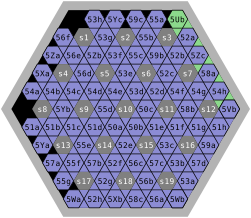 |
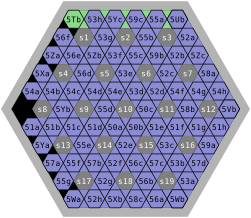
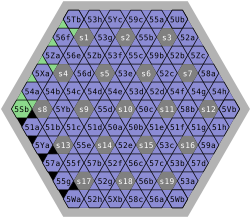
| figure 5d4 — add tile 5T | figure 5d5 — add tile 5S | figure 5d6 — add tile 5R |
 |
 |
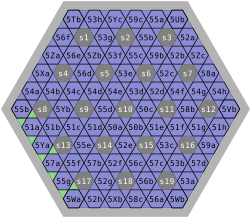 |
Very little of tile 5R, the final tile, is visible in figure 5d6.
Now the board is full, and figure 5e merely unifies the colors:
| figure 5e |
 |
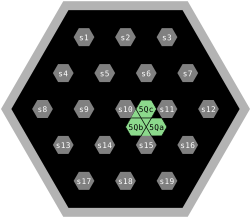
Tile 5Q in figure 5f below is another minimal tile that could start the board-filling procedure. If either of these tiles is placed elsewhere on the board, the procedure will still work, although the possible sequences of adding tiles might be greatly different.
| figure 5f | figure 5a — as above |
 |
|